Marshwood Middle School Immigration Project: A Journey to 1905
Marshwood Middle School students recently completed an in-depth, experiential history project focused on immigration to the United States in 1905. This comprehensive assignment was designed to foster empathy and provide students with a deep, personal understanding of the challenges and realities faced by immigrants during this pivotal era.
Creating a New Identity
The project began with a cornerstone task: each student selected a country of origin and meticulously developed a unique immigrant character. This character served as their lens throughout the project, enabling them to connect directly with the historical narrative.
The Immigrant Experience: Steerage and Ellis Island
A critical element of the simulation was the common experience shared by all characters: traveling in steerage. Students were required to understand that their fictional journey involved the purchase of the cheapest ticket, placing them in the most rudimentary and often grueling conditions at the bottom of the ship. Their destination, and the ultimate test of their character’s journey, was processing through the infamous halls of Ellis Island.
The culmination of the project involved the creation of a comprehensive final presentation, which required students to synthesize their research and creativity:
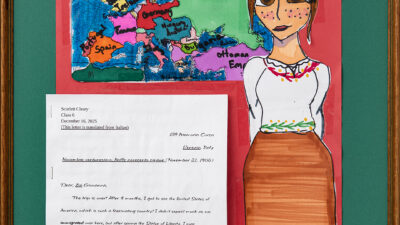
A Journey Map: A visual representation charting their character’s route from their home country to the United States.
The Letter Home: A personal letter written from the perspective of their immigrant character, addressed to a family member or friend “in the old country.” This letter detailed the journey, the experience of steerage, and the initial impressions of arrival in America.
Character Paper Doll: A handmade paper doll, meticulously dressed in the traditional clothing and style of their chosen country’s culture, providing a tangible representation of their character’s identity.
These final artifacts—the map, the letter, and the paper doll—were matted onto paper and proudly displayed throughout the school hallways. This exhibit not only celebrated the students’ hard work but also served as an educational display for the entire school community, bringing the history of early 20th-century immigration vividly to life.